
Materials & Methods

Materials & Methods
The workflow begins with sample lysis, releasing nucleic acids and proteins from the clinical sample. Magnetic beads are first used to non-specifically extract and concentrate nucleic acids, including viral RNA. The purified material is then amplified to generate detectable products. Proprietary peptide nucleic acid (PNA) probes, immobilised on magnetic beads, subsequently capture the target amplicons with high specificity. In parallel, complementary bead chemistries enable the simultaneous capture of antigens and host antibodies, allowing both molecular and serological information to be obtained from the same sample.
Once target capture is complete, the magnetic beads are manipulated and purified using integrated magnetic processing steps to remove non-specific material and concentrate the targets of interest. The enriched complexes are then transferred onto a proprietary CMOS semiconductor sensor array, where detection occurs electronically without the need for bulky optical instrumentation.
At the sensor surface, the platform performs concurrent multimodal analysis, enabling simultaneous measurement of viral load, antigen presence, and immune response biomarkers in a single automated workflow. This unique capability provides a far more comprehensive diagnostic picture than conventional single-mode assays, supporting applications in infectious disease diagnosis, treatment monitoring, decentralized testing, companion diagnostics, and remote healthcare delivery.
The system has been engineered as a fully automated, portable, stand-alone instrument requiring minimal user intervention and no highly trained laboratory personnel. By integrating advanced microfluidics, semiconductor electronics, molecular chemistry, and automated assay processing into a single platform, Altratech aims to bring highly sensitive molecular diagnostics out of centralized laboratories and directly to the point of care and point of need.

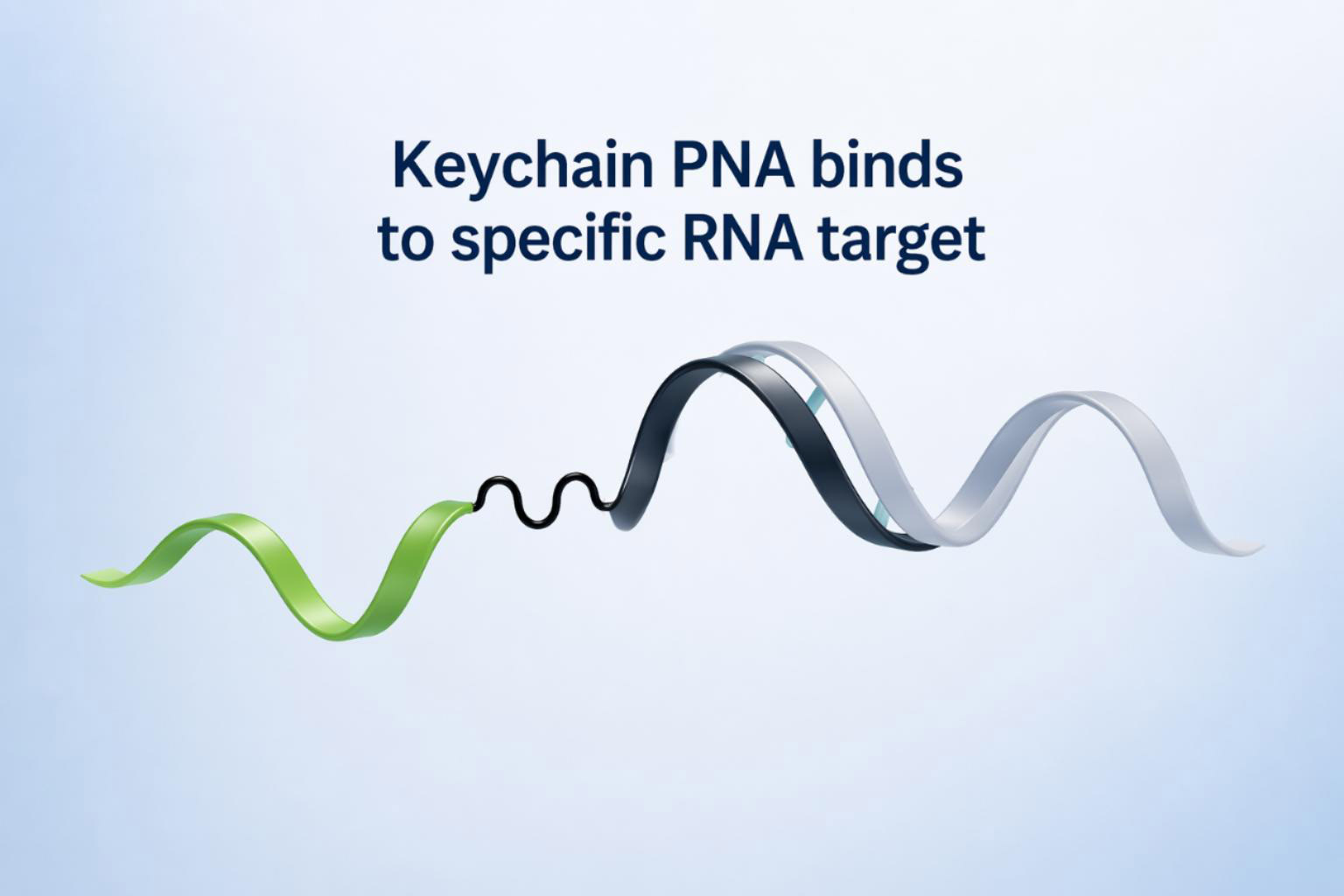
PNA Probes
Peptide Nucleic Acids (PNA) are synthetic mimics of DNA which can be used as probes in diagnostic assays. Synthesised with FMOC chemistry, synthetic PNAs are not recognised or degraded by proteases and nucleases in biological matrices due to their unnatural backbone. This enables specific target capture directly from biological samples, eliminating centrifugation. Improved chiral (‘Keychain’) left-handed (LH) PNAs have also been co-developed with the US National Institutes of Health, and are synthesised in-house. These offer significant extra assay flexibility, as biorthogonal tags for extra specificity.
(Fig. 1)
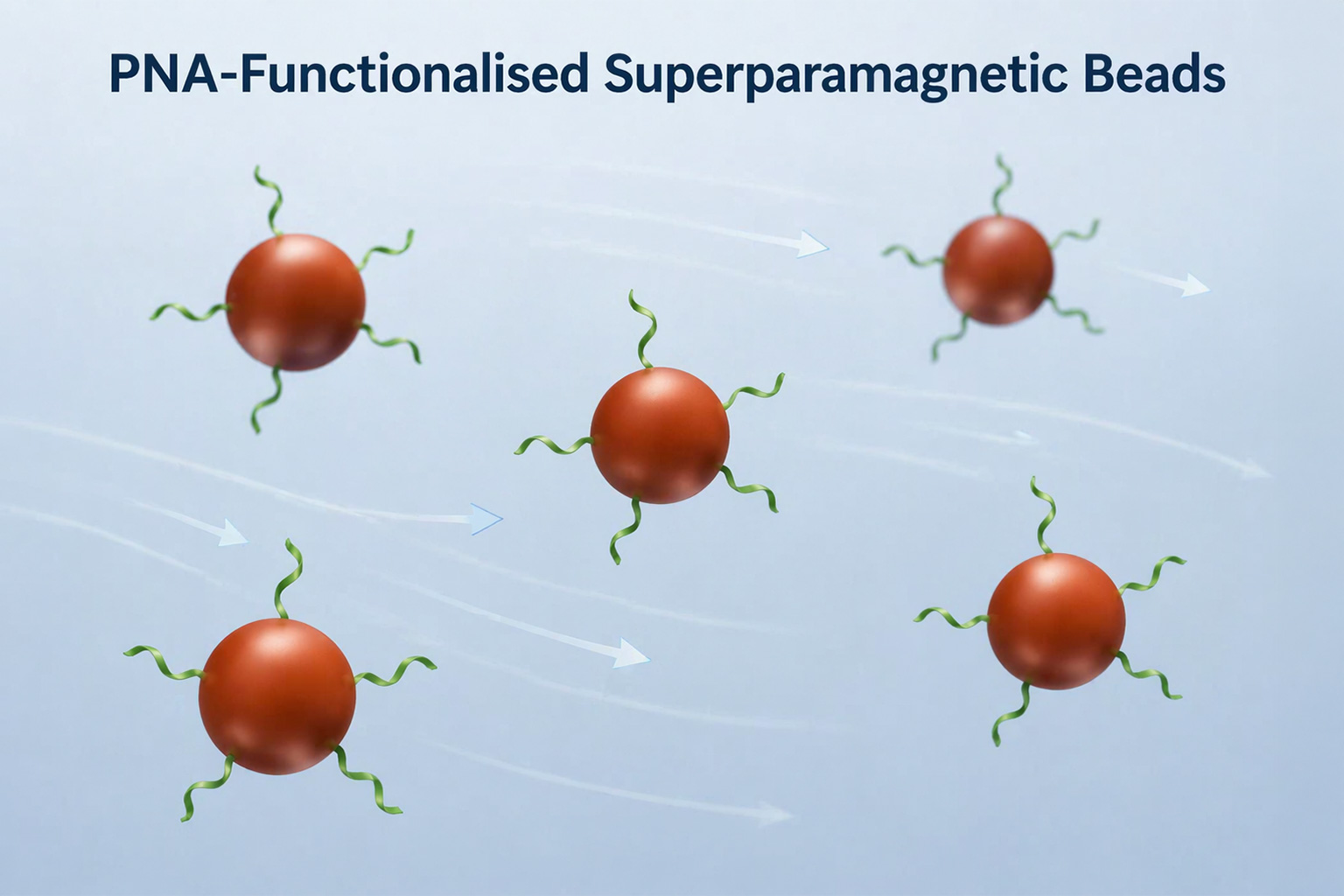
Superparamagnetic Beads
PNA-coated superparamagnetic beads with captured target are magnetically moved through the assay steps.
(Fig. 2)
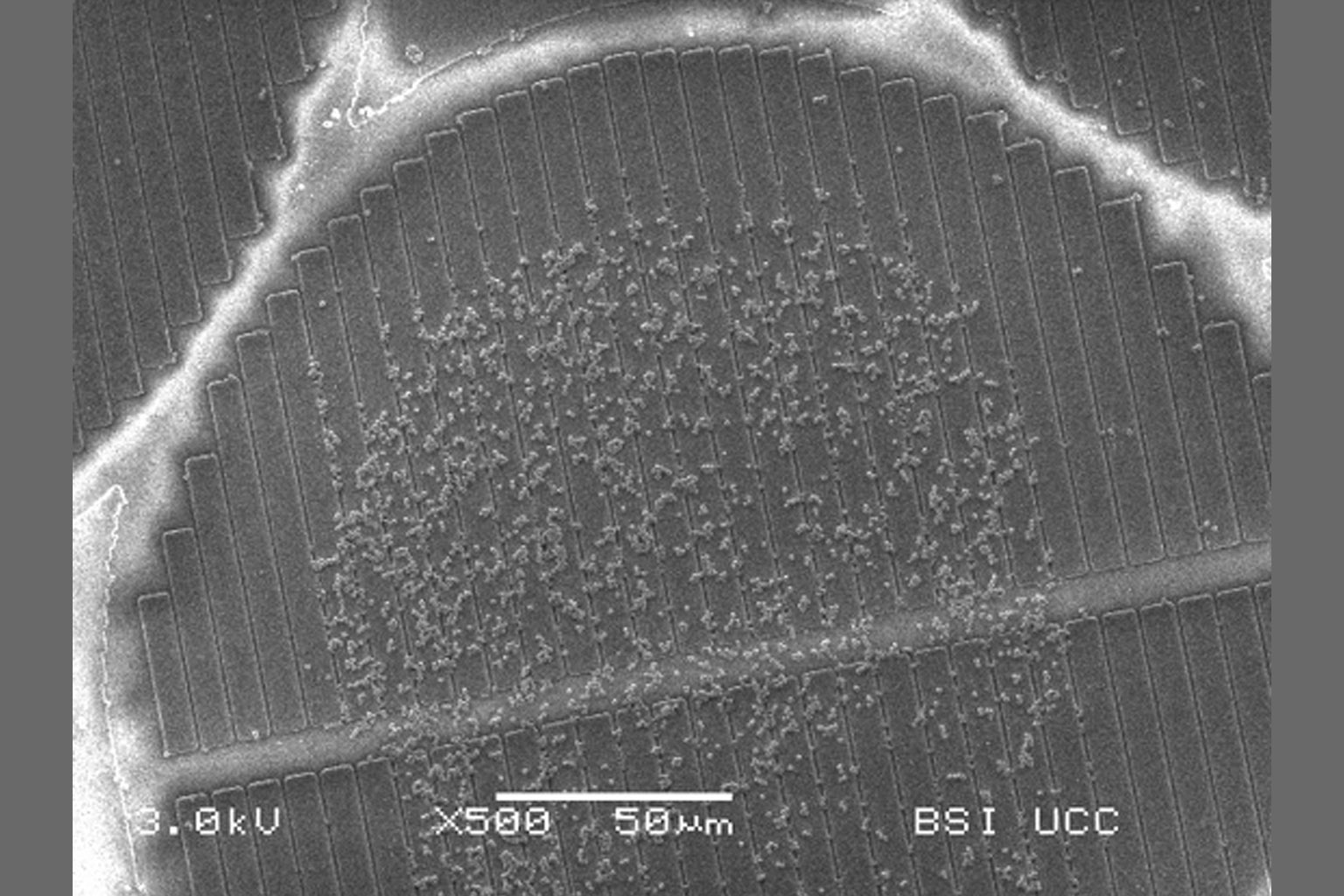
Digital CMOS Sensor Chip
Paramagnetic beads are specifically tethered by the target to Altratech’s proprietary sensor and quantitatively detected by employing fringe-field sensing (linearity: R=0.96). This digital standard-CMOS sensor chip replaces Optical Detection with Electronic Detection.
(Fig. 3)